Gir is often spoken about in the context of lions, safaris, and forest drives. Travelers usually begin their journey by choosing a well-located resort in Sasan Gir, which becomes the base for exploring both wildlife and the quieter rhythms of the forest. Yet spend a little unhurried time around Aranya Gir, and you notice a quieter, equally fascinating side of the landscape. The area around this resort in Sasan Gir is alive with bird calls at dawn, subtle movements in the grass, and fleeting flashes of color among the trees. Birdwatching here is less about checklists and more about slowing down, observing, and letting the forest reveal itself naturally.
The surroundings of the Gir resort Sasan Gir areas offer a mix of dry deciduous forest, open scrubland, grass patches, and small water bodies. These landscapes are often shared by safari routes, village edges, and nature trails connected to nearby Sasan Gir lion resort stays. This varied habitat supports a wide range of resident birds and seasonal visitors, making even a simple morning walk rewarding. Over time, certain species become familiar companions, each with their own behavior and rhythm.
1) Black Redstart
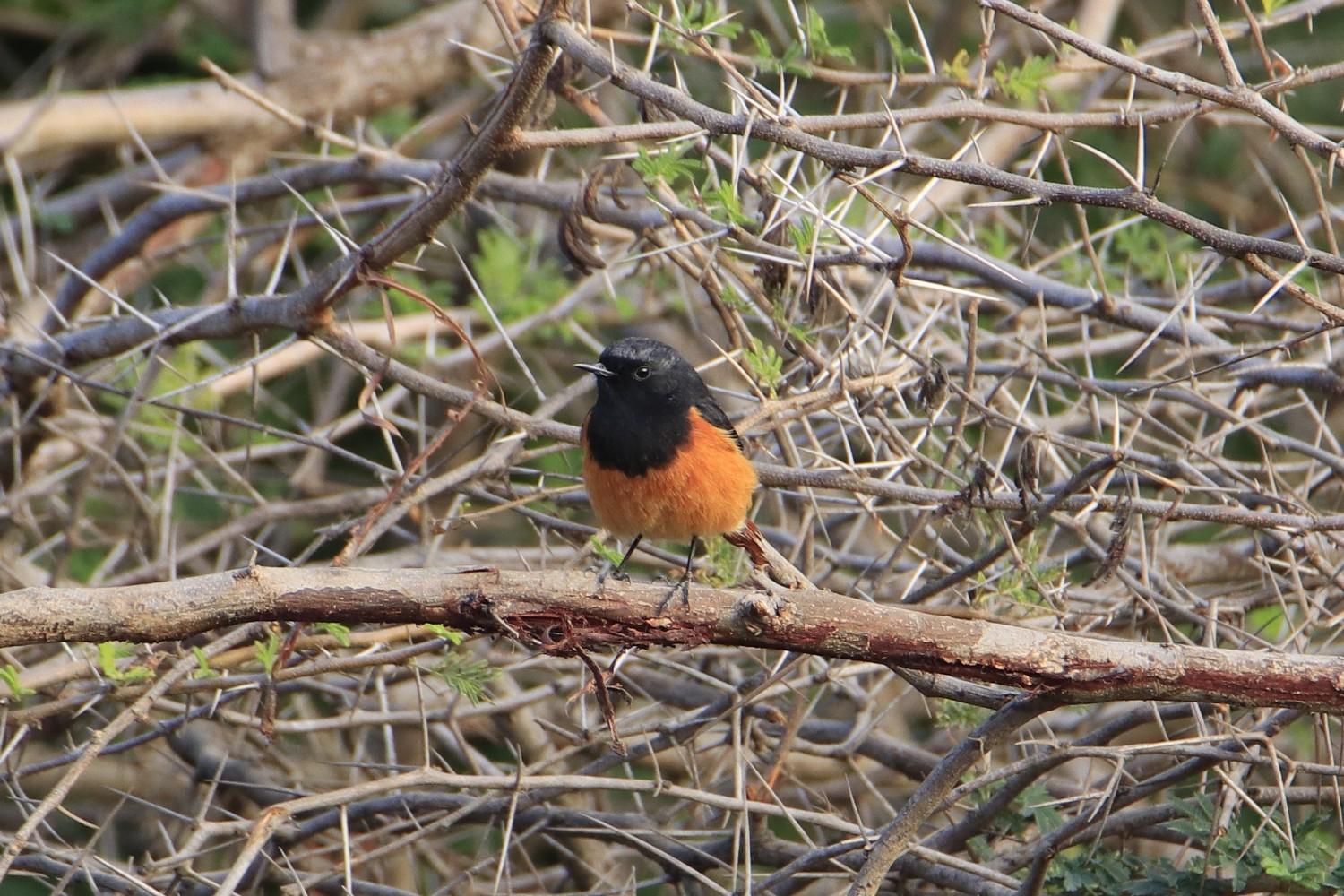
The Black Redstart is often among the first birds noticed during early mornings. Small and alert, it prefers open spaces where it can perch quietly on rocks, fence posts, or low branches. Its dark plumage contrasts with a soft reddish tail that flicks constantly as it searches for insects. Around Gir, this bird is most seen during cooler months, especially near forest edges and clearings that lie close to walking trails from a nearby resort in Sasan Gir, where early mornings are calm and undisturbed.
2) White-Throated Kingfisher
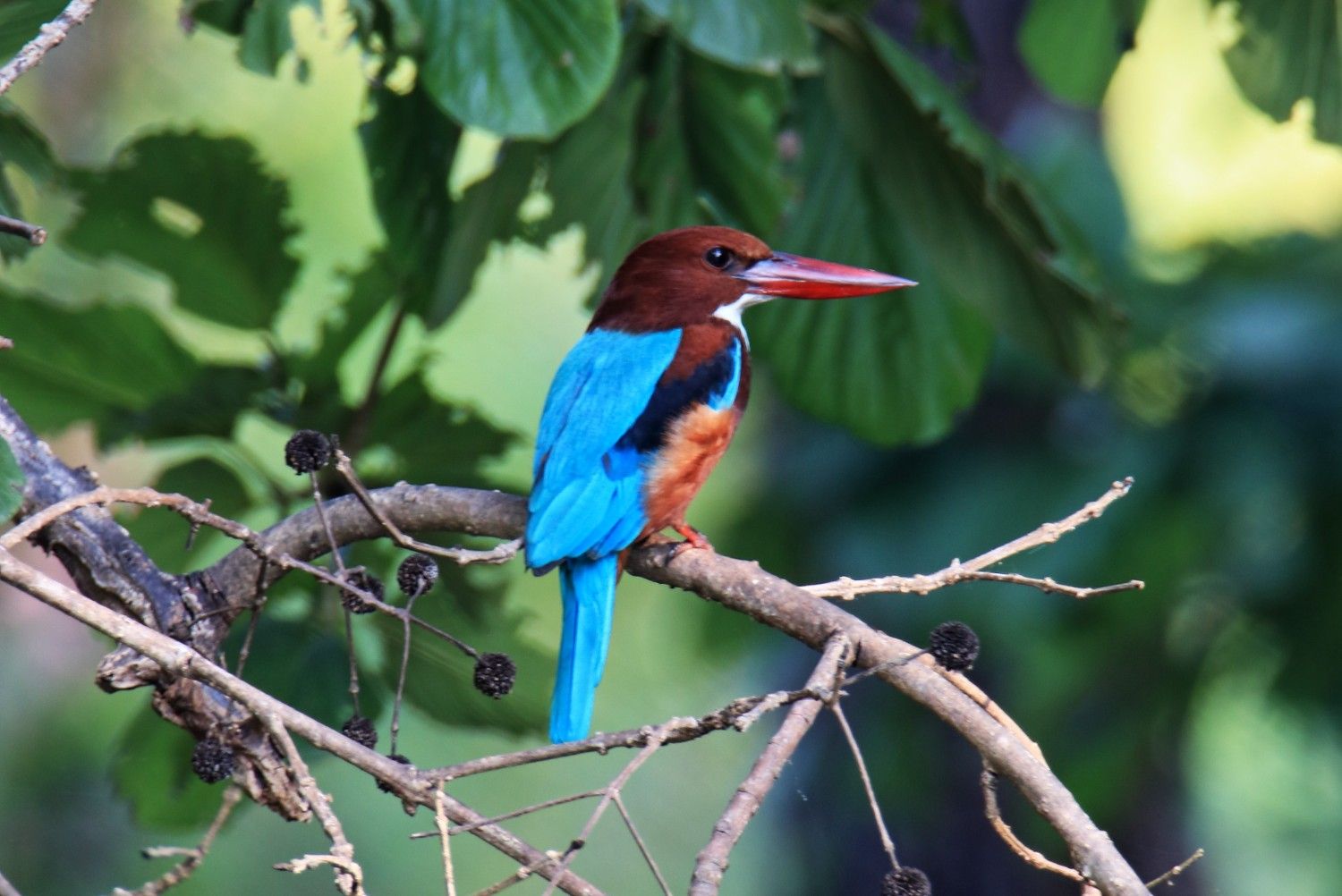
Few birds capture attention as quickly as the White-Throated Kingfisher. With its bold blue wings and rich brown body, it is impossible to miss once spotted. Unlike many kingfishers that remain close to water, this one is comfortable across fields, roadsides, and wooded areas. Its loud, sharp call often gives away its location before it appears, perched patiently and scanning the ground for prey near Sasan Gir lion resort surroundings.
3) Coppersmith Barbet
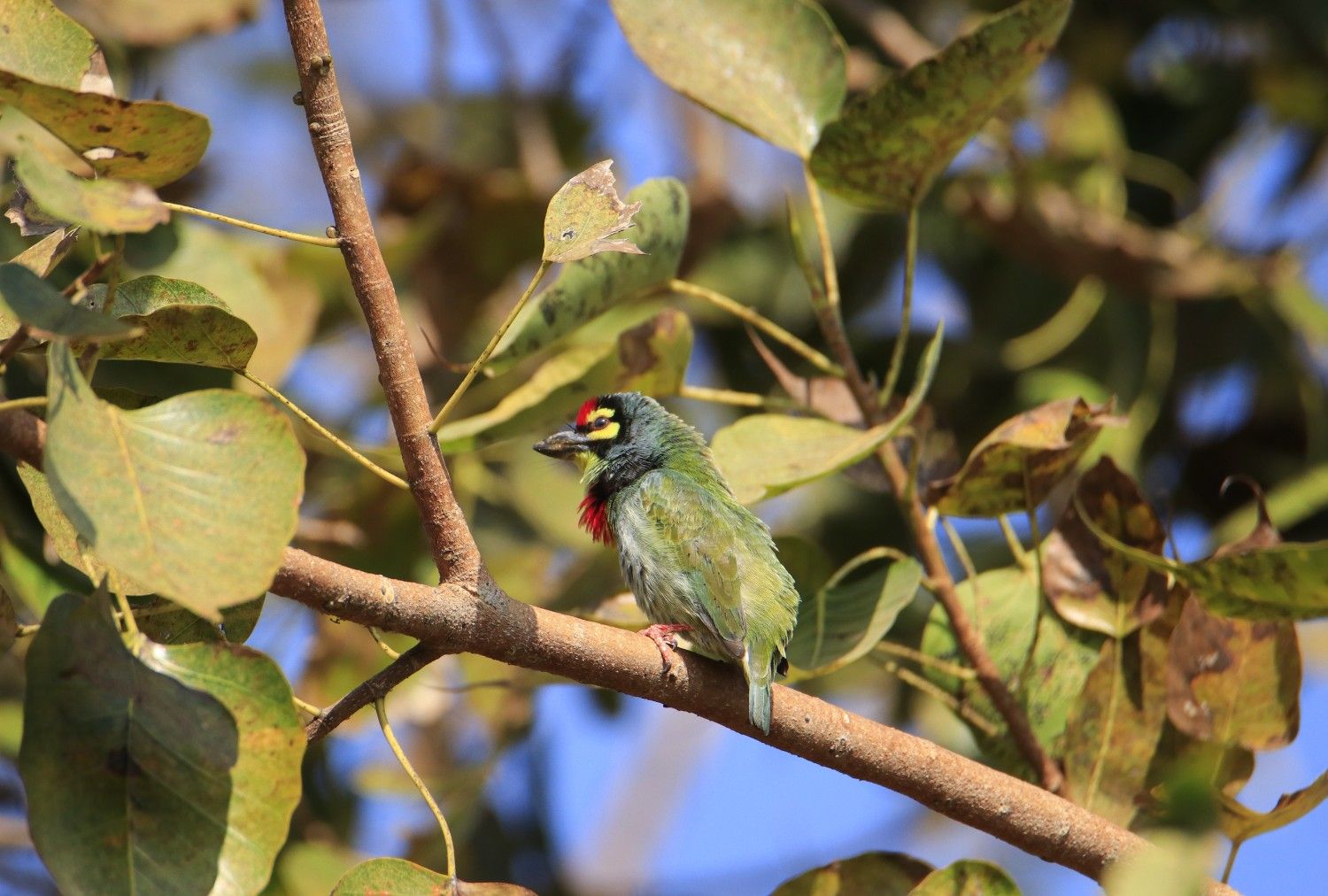
Long before it is seen, the Coppersmith Barbet is heard. Its steady, metallic call echoes through the trees, especially during warmer parts of the day. Well, camouflaged in green foliage; it often goes unnoticed unless it moves or calls. The flashes of red on its forehead and throat are brief but striking. Beyond its charm, the barbet plays an important role in seed dispersal, quietly supporting forest regeneration in Gir.
4) Sandpiper
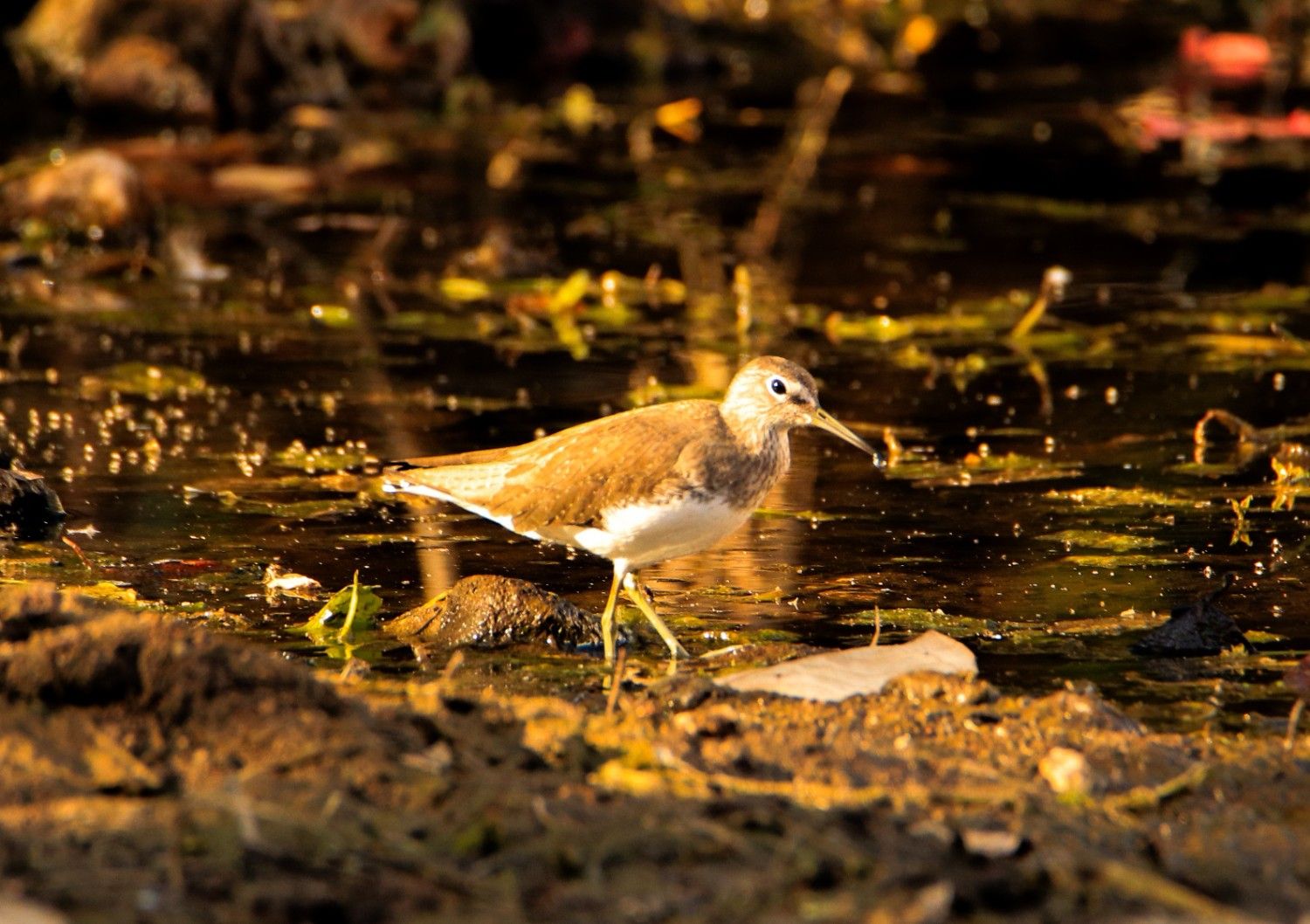
During winter, water edges around Gir take on a different character with the arrival of migratory birds like Sandpipers. These slender, soft-toned birds are usually seen walking along muddy banks, probing the ground with quick, precise movements. Their presence is subtle and watching them requires patience. Spotting Sandpipers near lakes and reservoirs around Gir resort Sasan Gir locations offers a gentle reminder of how far birds travel to find suitable seasonal habitats, often pausing briefly before continuing their long journeys.
5) Scaly-Breasted Munia
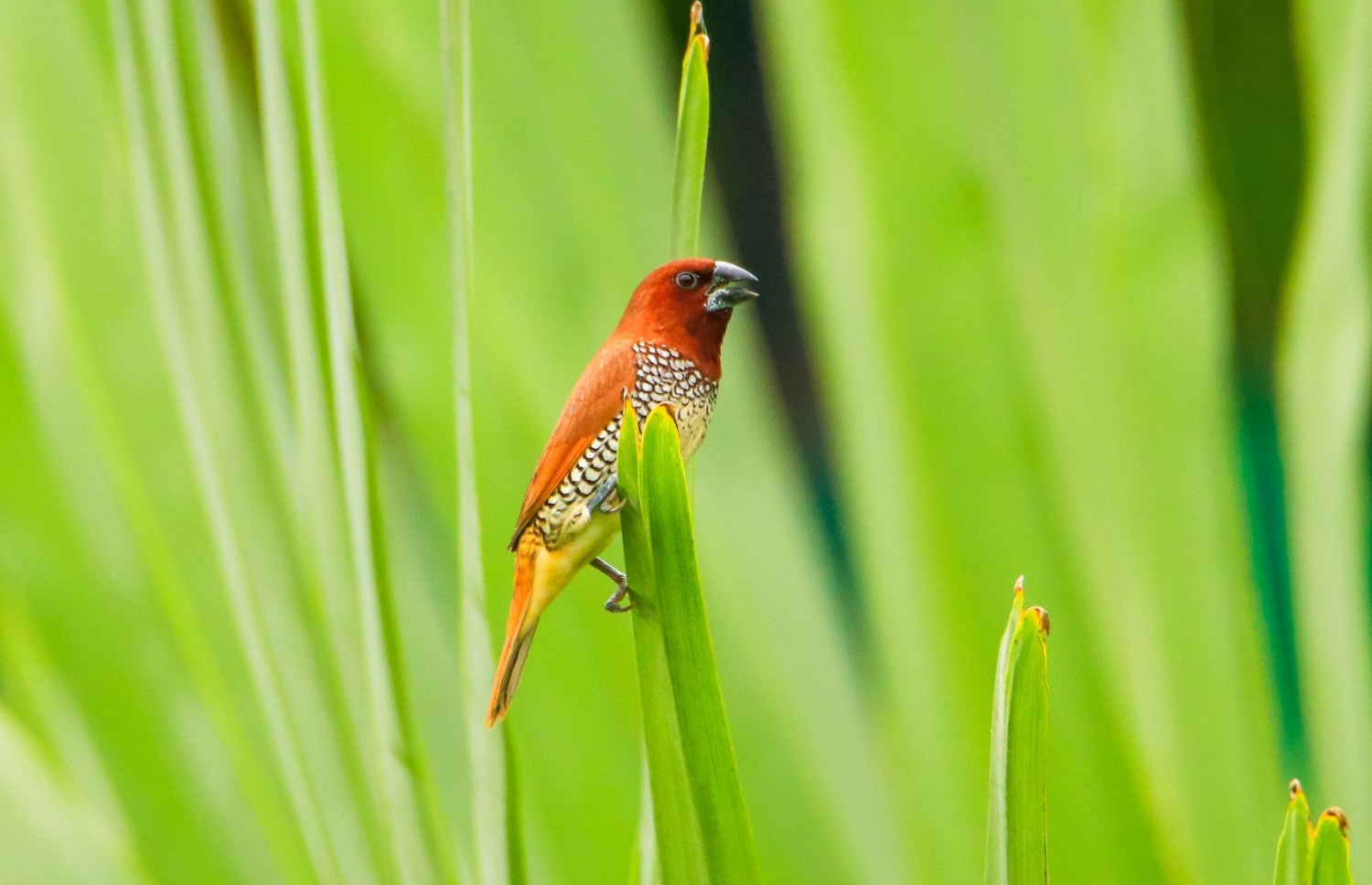
The Scaly-Breasted Munia brings a sense of liveliness to open grasslands and farmlands. Often moving in small flocks, these birds hop between grass stems and low shrubs, feeding seeds. Their patterned underparts resemble tiny scales, giving them a distinctive appearance. They are calm, social birds, and observing their quiet interactions adds a softer, almost pastoral note to the Gir landscape.
6) Tickell’s Blue Flycatcher
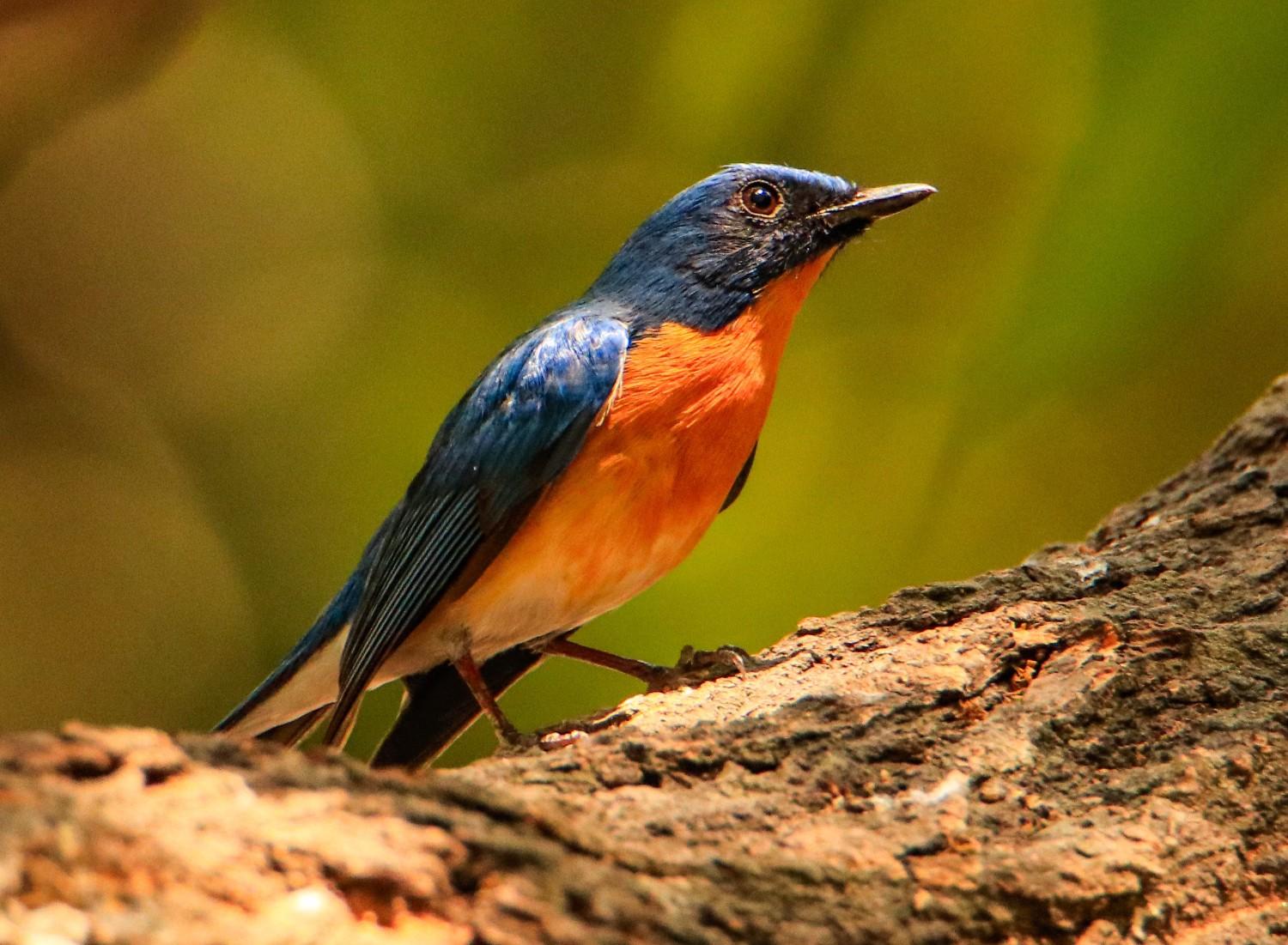
Tickell’s Blue Flycatcher is not a bird that reveals itself easily. It prefers shaded forest interiors and dense undergrowth, where it blends into the calm stillness of the woods. When spotted, the male’s deep blue color feels almost unexpected against the earthy tones of the forest. Usually seen alone or in pairs, this flycatcher rewards patience, making it a favorite among birdwatchers who enjoy quiet observation rather than quick sightings.
7) Woolly-Necked Stork
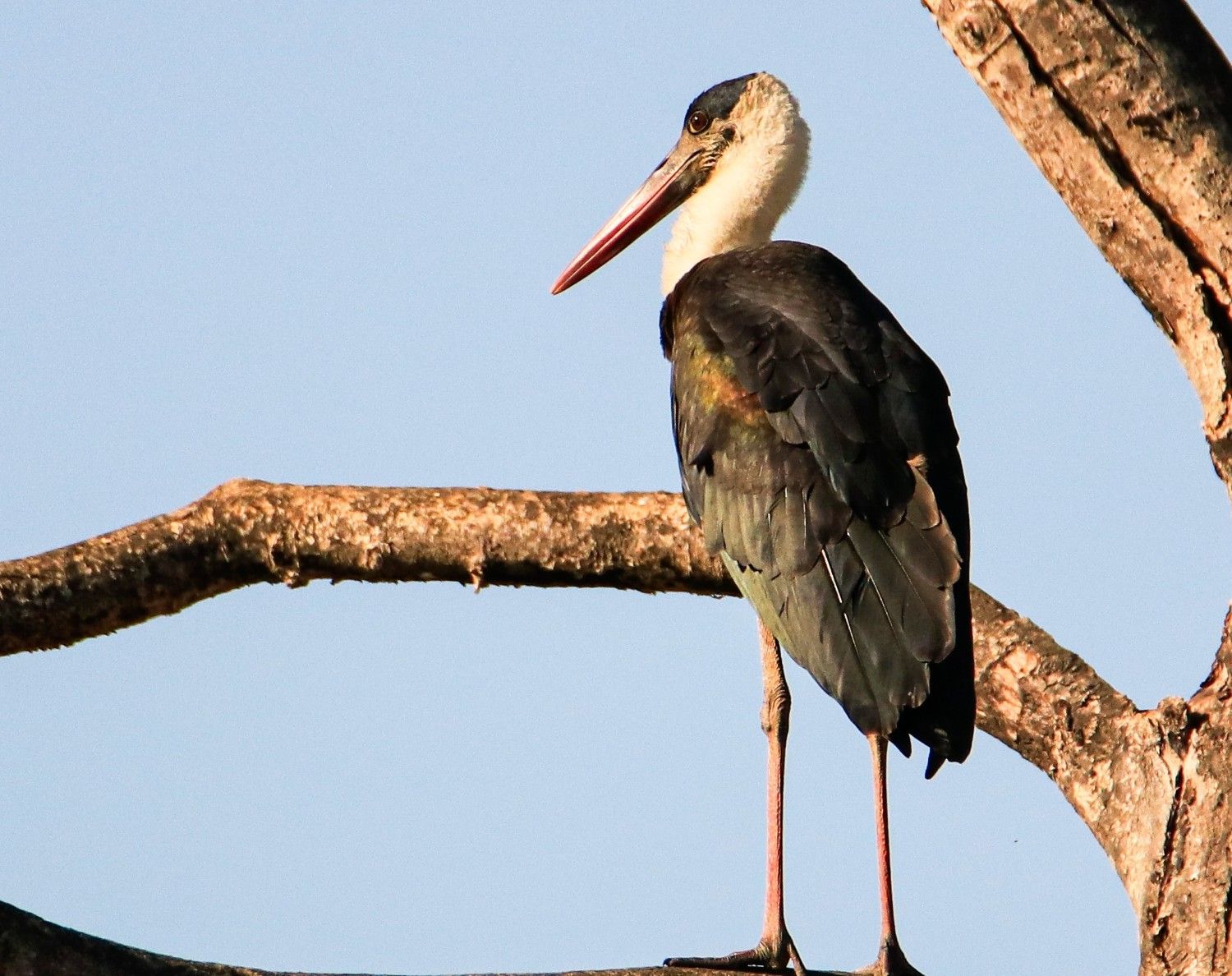
The Woolly-Necked Stork stands out simply because of its size and presence. Tall and composed, it is often seen near wetlands, open fields, or village water sources. Its black body and contrasting white neck give it a dignified appearance. Watching it forage slowly for frogs and insects highlights the importance of these open, shared landscapes around Sasan Gir lion resort areas—spaces where wildlife, farming activity, and village life quietly overlap.
8) Pond Heron
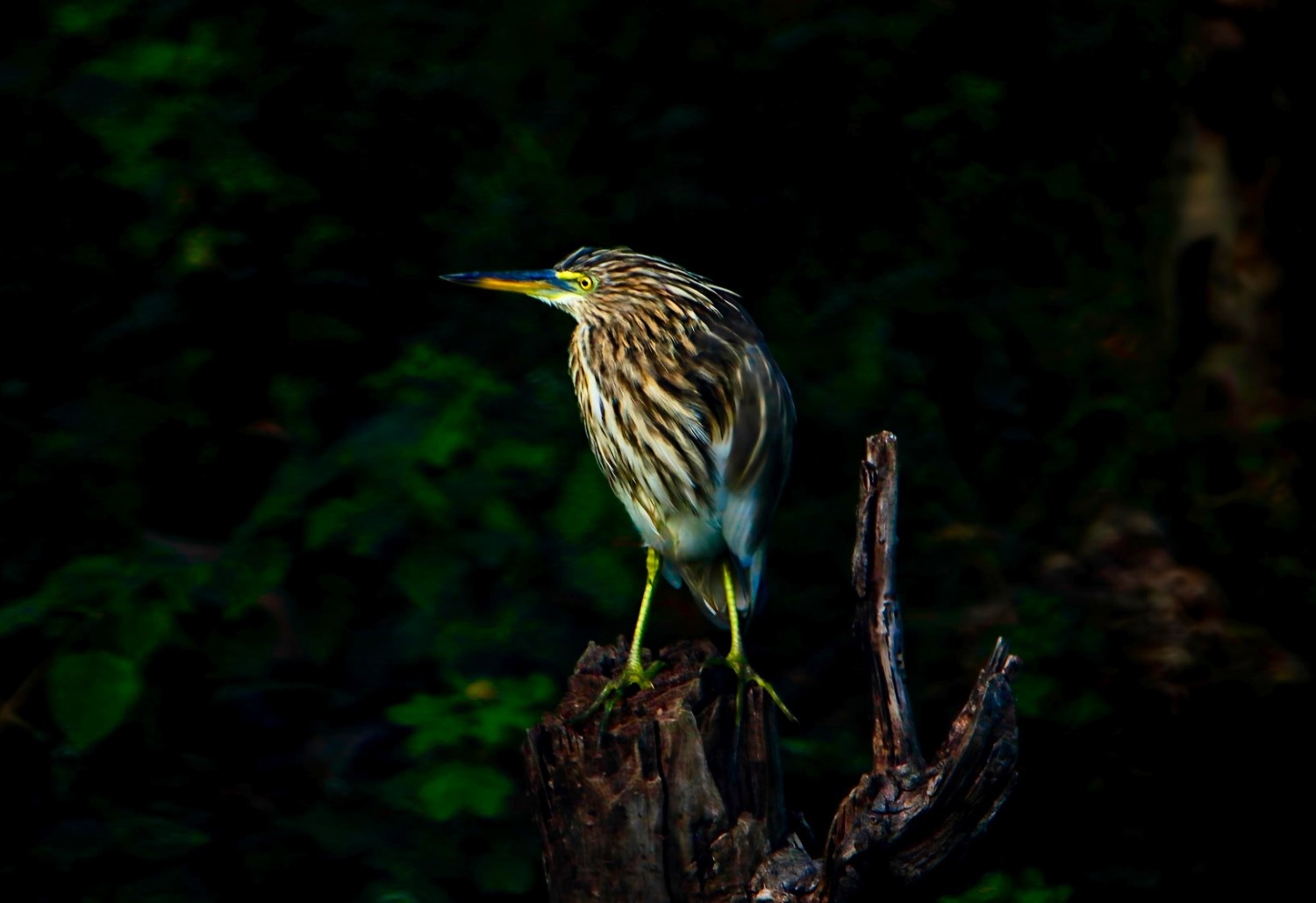
At first glance, the Pond Heron may seem unremarkable as it stands motionless near water. But when it suddenly takes flight, its hidden white wings create a striking visual. Known for its patience, the Pond Heron waits quietly before striking fish or insects. Around Gir, it is commonly found near small ponds, irrigation channels, and streams, often blending seamlessly into the surroundings.
Conclusion:
Birdwatching around Aranya Gir adds a quieter, more reflective dimension to any visit. Away from the excitement of safaris, these everyday encounters with birds reveal the subtle richness of the region. Staying at a resort in Sasan Gir allows time and space to notice these moments—early morning calls, silent movements, and brief flashes of color. For nature enthusiasts, this slower connection with Gir’s birdlife—experienced while staying at a thoughtfully located Gir resort Sasan Gir—often becomes one of the most memorable parts of the journey.